How Ezio Solutions Is Redefining Quality Control in Manufacturing
January 27, 2020

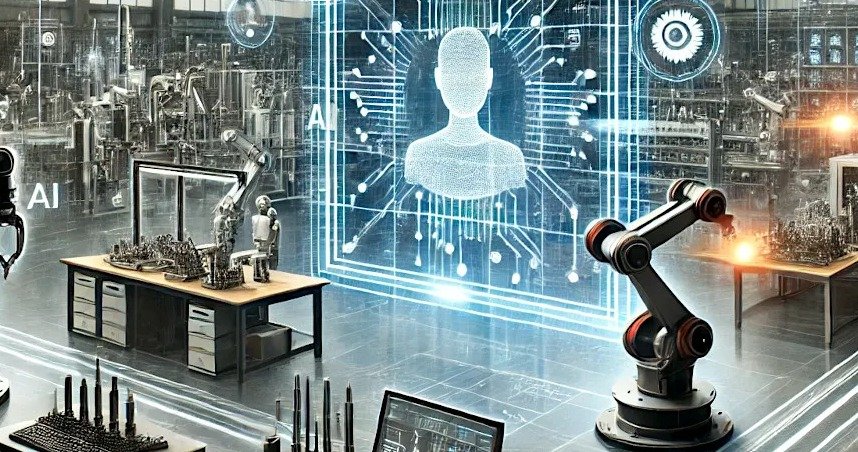
In modern manufacturing, quality is not just a compliance metric — it is a brand differentiator.
As production speeds increase and defect tolerances shrink, traditional inspection methods struggle to keep up. Manual inspection is often:
Historically, quality control relied on human inspectors or rule-based vision systems.
AI Vision overcomes these gaps through deep learning.
An AI Vision Inspection System combines:
It visually inspects products on production lines and makes automated PASS/FAIL decisions within milliseconds.
This enables 100% inspection coverage without slowing production.
AI models trained by Ezio Solutions can detect:
Even micro-level anomalies invisible to the human eye can be identified.
Unlike off-the-shelf vision tools, Ezio builds custom-trained inspection models aligned to each client’s product and defect profile.
This ensures stable performance in real factory environments — not just lab accuracy.
Ezio’s AI Vision Systems integrate seamlessly with:
This creates a closed-loop quality automation environment.
Manufacturers deploying Ezio’s AI Vision solutions achieve:
Quality shifts from reactive detection to proactive prevention.
Every inspection performed by Ezio’s AI systems is logged with:
This enables:
Key drivers include:
AI Vision is rapidly becoming the global benchmark for zero-defect manufacturing.
Next-generation AI vision systems will evolve into:
Ezio Solutions is actively engineering these next-phase capabilities to support Industry 4.0 factories.
An AI Vision Inspection System uses industrial cameras and deep learning algorithms to automatically inspect products and detect defects in real time.
AI vision systems can achieve up to 99%+ inspection accuracy when trained on production-grade datasets.
AI can detect scratches, dents, paint defects, missing components, assembly errors, and dimensional deviations.
AI inspection is faster, fatigue-free, consistent, and provides digital traceability for every inspected product.
Ezio Solutions delivers end-to-end deployment including feasibility study, hardware advisory, AI model development, system integration, and post-deployment optimization.
Automotive, electronics, textiles, casting, FMCG, and industrial manufacturing sectors widely use AI vision systems.


 connect@eziosolutions.com
 +91 75300 93682
 Coimbatore, Tamilnadu.